
Best B Series Performance Upgrades
Best B series performance upgrades for real Honda builds - smart mods for power, response, reliability, and track-ready results on a usable budget.
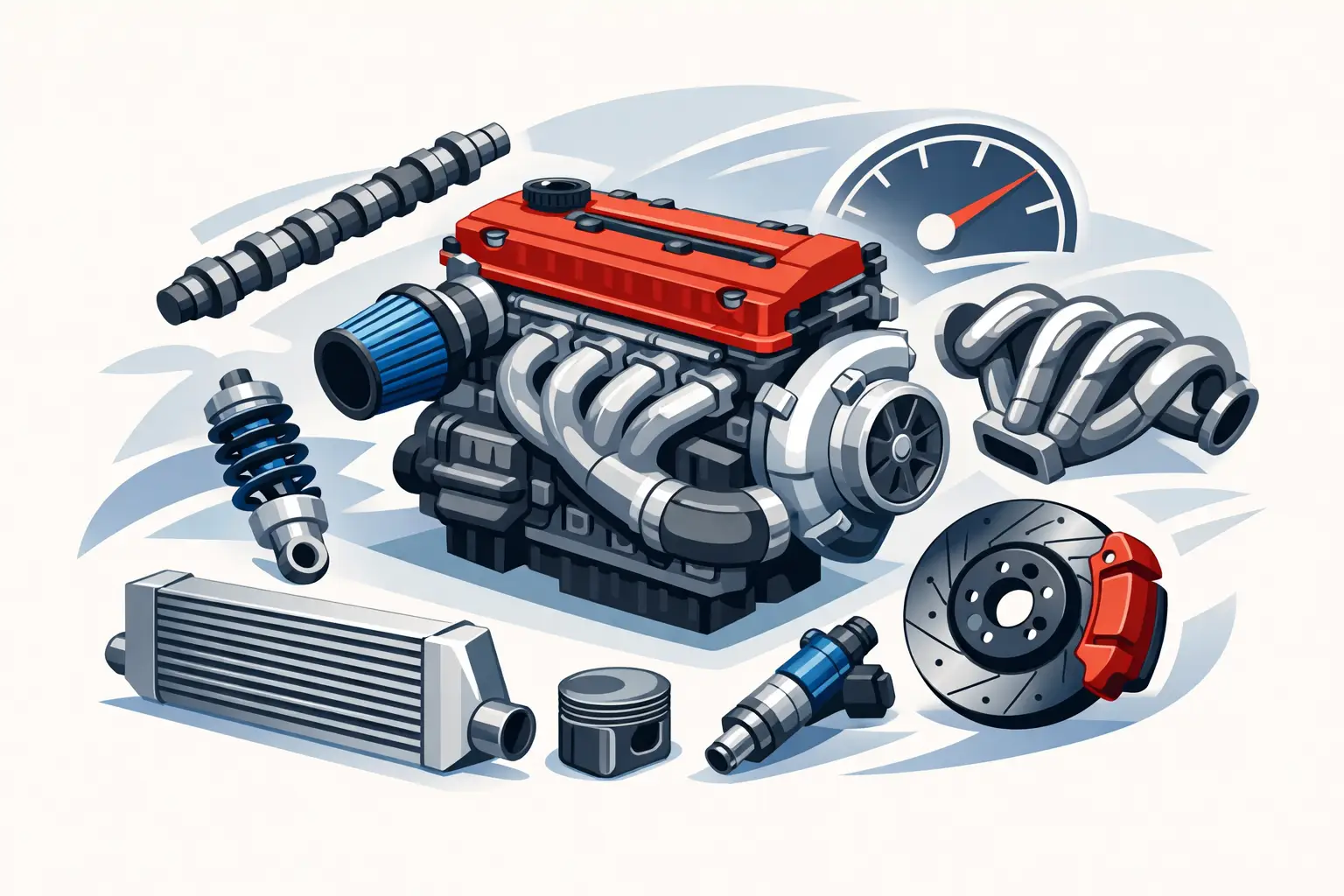
Ask ten Honda guys about the best B series performance upgrades and you’ll get ten parts lists, three old forum arguments, and at least one person telling you to just swap in a K. That misses the point. A well-built B series still makes sense because the parts support is deep, the engines respond well to smart bolt-ons, and the platform rewards good planning more than random spending.
If you’re working with a B16, B18C, B18C1, or even a non-VTEC B18B/B20 setup, the right upgrade path depends on how the car is used. A street EG needs something different than a track DC2, and a daily-driven turbo LS build has different weak points than a high-compression all-motor GS-R. The best results come from matching parts, tuning, and drivetrain choices instead of chasing peak horsepower numbers.
What the best B series performance upgrades really are
The best B series performance upgrades are the ones that improve the whole combination. That usually means starting with airflow, fuel, tuning, cooling, and traction before jumping straight to aggressive internals. Too many builds end up with expensive cams and a fancy intake manifold, then lose to a better-sorted setup because the tune is weak or the transmission can’t put power down.
On a healthy stock engine, the first priority is always baseline condition. Compression numbers, leakdown, oil pressure, cooling system health, and timing belt service matter more than any shiny part. If the engine is tired, your upgrade budget can disappear fast. Real performance starts with a motor that’s mechanically sound.
Start with the intake, header, and exhaust
For most naturally aspirated setups, this is still the most practical place to begin. A quality cold air intake, a properly sized header, and a free-flowing exhaust wake up a B series without hurting drivability. On VTEC engines especially, these mods improve top-end pull and sharpen the engine’s character without turning the car into a headache.
The trade-off is simple. Cheap parts usually fit poorly, crack, or make power in the wrong part of the curve. A giant exhaust might sound aggressive, but if the piping is oversized for your setup, you can lose midrange response where a street car spends most of its life. For many B series builds, a balanced exhaust size works better than chasing the loudest setup possible.
Header choice matters more than a lot of people think. Different primary and collector designs change where the engine makes power. If you want a street car that pulls cleanly through the midrange, choose parts for that goal. If the car lives at high rpm on track, the setup can be more aggressive.
Tuning is one of the best B series performance upgrades
If there’s one mod that gets underestimated, it’s engine management. A chipped ECU, standalone, or modern programmable setup with a real dyno tune often delivers more usable improvement than the next bolt-on part. Tuning affects power, throttle response, idle quality, cold starts, fuel delivery, and engine safety.
This is especially true once you change injectors, cams, compression, or add boost. Without tuning, you’re guessing. With tuning, the car actually uses the parts you paid for.
A basic bolt-on B16 or GS-R with a proper tune can feel cleaner and stronger than a more expensive car with mismatched hardware. On turbo or high-compression builds, tuning is not optional. It’s the difference between a setup that lasts and one that ends up on a stand with damaged pistons.
Cams and valvetrain for real gains
Once the basic breathing mods and tuning are handled, cams are one of the most effective ways to add power to a VTEC B series. Good camshafts change the engine’s personality in a way intake and exhaust parts alone cannot. You get more area under the curve, stronger pull after VTEC, and better use of supporting mods.
But cams are where people start making expensive mistakes. Bigger is not always better. Aggressive cam profiles need the right springs, retainers, and tuning support. They may also move the powerband higher than you want for a street-driven car. If you spend most of your time below 5,500 rpm, a setup designed for 9,000 rpm isn’t helping you much.
For non-VTEC engines, the path is less straightforward. You can improve them, but the cost-to-gain ratio can push many owners toward LS/VTEC, turbocharging, or a full engine change. That doesn’t make non-VTEC builds bad. It just means you need to be realistic about goals and budget.
Intake manifolds and throttle bodies
These upgrades can work well, but only when the rest of the combo supports them. On a stock or lightly modified engine, a larger intake manifold and throttle body might not add much beyond engine bay appeal. On a cammed, high-rpm, well-tuned setup, they can help the engine carry power better up top.
This is one of those areas where parts matching matters. Oversizing the throttle body or choosing a manifold that kills velocity can make the car feel softer at lower rpm. For a drag car or all-motor build that lives high in the rev range, that trade-off may be worth it. For a daily street car, maybe not.
Don’t ignore the transmission and differential
Some of the best B series performance upgrades are not engine parts at all. A shorter-ratio transmission or a limited-slip differential can transform how the car accelerates and exits corners. If you’ve driven a Honda with decent power but an open diff, you already know how easy it is to waste that power.
An LSD is one of the smartest upgrades for street and track use. It helps the car put power down, improves consistency, and makes the chassis feel more cooperative instead of one-tire-firing out of corners. Gear ratios matter too. A transmission matched to your engine’s powerband keeps the car in the right part of the rpm range and often feels faster than a small horsepower bump.
This is also where used OEM Honda and Acura parts can make a lot of sense if they’ve been properly inspected and sourced. Good factory gearboxes and drivetrain components still have value because fitment, reliability, and real-world performance matter more than catalog hype.
Suspension, mounts, and traction upgrades
A B series car that makes decent power but has sloppy mounts, bad bushings, and weak dampers won’t feel right. The engine can only do so much if the chassis is moving around and the tires can’t stay planted. Suspension upgrades don’t add dyno numbers, but they often make the biggest difference in how quick the car actually is.
A solid street setup usually starts with quality shocks or coilovers, fresh control arm bushings, good tires, and mounts that control engine movement without making the car miserable. Stiffer mounts improve shift feel and throttle response, but they add vibration. Again, it depends on the use case.
If the car sees track time, proper alignment and brake upgrades belong in the same conversation. More speed means more demand on every other system.
Turbocharging changes the upgrade order
For anyone planning boost, the best B series performance upgrades shift quickly. You still need a healthy engine, but your focus moves toward fuel system capacity, engine management, cooling, intercooling, and bottom-end durability. A stock internal B series can handle moderate boost if the tune is right, but the margin for error gets smaller as power climbs.
On turbo builds, don’t waste money stacking naturally aspirated parts that won’t matter once the turbo goes on. Think in systems. Injector size, pump capacity, manifold design, wastegate control, clutch selection, and axle health all matter. A fast turbo Honda is usually the result of restraint and planning, not just bigger parts.
Reliability upgrades are performance upgrades
This part gets overlooked because it isn’t glamorous. A better radiator, fresh hoses, a healthy oil pump, proper baffling for track use, and a strong clutch all support performance. If the engine overheats, starves for oil, or slips the clutch, the power number means nothing.
The B series is durable, but most of these engines are not young anymore. Age changes what “bolt-on reliable” really means. Seals harden, sensors drift, wiring gets brittle, and previous owners leave behind questionable fixes. Mechanic-backed inspection matters here, especially when sourcing used OEM components for older Honda and Acura platforms.
The smartest upgrade path for most builds
If you want the most practical order, it usually goes like this: make the engine healthy, upgrade intake/header/exhaust, tune it correctly, improve traction and drivetrain, then move into cams or boost based on your goal. That path avoids a lot of wasted money and keeps the car enjoyable through each phase.
For a street car, balance beats bragging rights. For a track car, consistency beats peak numbers. For a budget build, buying vetted parts instead of gambling on mystery-condition marketplace parts can save time and money fast. That’s especially true with older Honda performance platforms where fitment and condition are everything.
The B series still rewards smart builders. Pick upgrades that work together, be honest about how you use the car, and build the combination instead of the comment section. That’s how a Honda ends up faster, more reliable, and a lot more fun every time you turn the key.