
SR20 Swap Parts Source Guide
Need an sr20 swap parts source? Here’s how to find vetted OEM and aftermarket swap parts with better fitment, pricing, and less downtime.
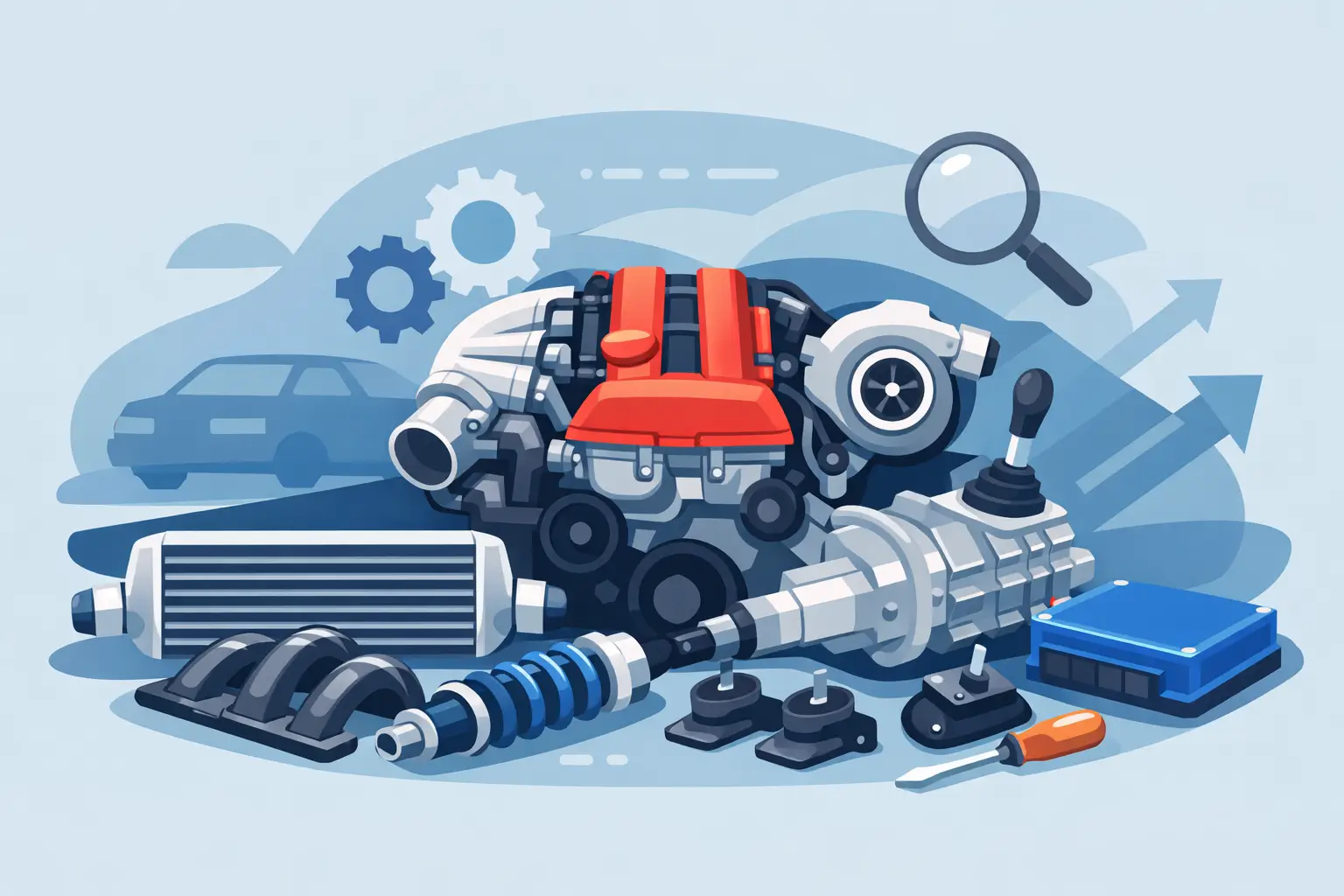
The fast way to stall an SR build is buying parts from five random sellers and hoping the pile works together. If you are searching for an sr20 swap parts source, what you really need is not just inventory. You need a source that understands how SR swaps fail - missing brackets, cut harnesses, wrong sensors, unknown transmission condition, and "complete" packages that still leave the car on jack stands.
That matters whether you are swapping an S13, refreshing an S14 drivetrain, or piecing together an SR for a different chassis. The hard part is rarely finding one big-ticket component. The hard part is finding the right combination of tested OEM pieces, usable accessories, and the small hardware that makes the swap actually finish.
What makes a good SR20 swap parts source
A real SR20 swap parts source should do more than move used parts. It should reduce guesswork. For most builders, that starts with condition, fitment confidence, and consistency across the order.
Used OEM SR parts can be a smart buy because Nissan built many of these components to last, and a clean original part often fits better than a cheap replacement. But used only works when somebody has actually inspected what they are selling. A valve cover with stripped bolt holes, a cracked igniter bracket, or a hacked lower harness is not a deal because the price is low.
The better source is usually one that handles Japanese performance platforms every day and knows what buyers will ask before they ask it. Was the engine compression tested? Is the turbo setup stock or mixed? Are the coil packs matched? Does the transmission shift cleanly? Is the CAS included? Those details separate a dismantler-grade operation from a random listing.
Why SR swaps are harder to source than they look
On paper, the shopping list seems simple. Engine, trans, ECU, harness, intercooler piping, fuel parts, mounts, and you are moving. In reality, SR swaps turn into a hundred decisions around chassis year, engine generation, emissions equipment, sensor style, and whether you want OEM drivability or a faster path to more power.
An S13 redtop or blacktop setup may not line up with an S14 or S15 part plan the way a newer enthusiast expects. Throttle body differences, igniter arrangements, MAF compatibility, turbo outlet orientation, transmission sensors, and ECU tuning strategy all change what parts make sense. A seller can have "SR20 parts" and still not be the right SR20 swap parts source for your build.
That is why inventory depth matters. A source that only has engines is helpful for one step. A source that stocks transmissions, accessories, OEM sensors, cooling parts, drivetrain pieces, and common replacement items is more useful because it keeps the build moving when the smaller needs show up.
Start with the swap package, then work backward
If you are buying for a full swap, start with the core assembly and let that dictate everything else. That means engine generation, intake side, turbo setup, transmission type, harness condition, ECU plan, and accessory completeness.
A complete pullout sounds ideal, but it depends on quality. A less complete package with tested major components can be better than a "full swap" with unknown electronics and damaged accessories. Plenty of builders overpay for completeness, then replace half the package after installation issues show up.
The smart move is to decide what you are willing to source used OEM, what should be replaced new, and what needs to be tested before money changes hands. Gaskets, hoses, belts, water pumps, clutch hydraulics, and many wear items usually make sense as fresh parts. Hard parts like brackets, timing covers, factory intake pieces, transmissions, and accessory mounts are often excellent used buys if inspected correctly.
The parts that usually create delays
The obvious components get all the attention. The smaller items cause most of the downtime. Missing MAFs, damaged igniters, cut harness plugs, broken coolant necks, cracked shrouds, and absent transmission hardware can stop a swap as effectively as a bad engine.
That is where a specialized inventory source earns its keep. Shops that dismantle these cars regularly tend to save the pieces other sellers throw in scrap. If you have ever lost a week searching for one stock SR bracket or a clean lower harness section, you already know why that matters.
Used OEM versus aftermarket for an SR swap
There is no one-size-fits-all answer here. It depends on the goal of the car.
If you want a reliable street setup, used OEM often wins on fitment and drivability. Nissan sensors, idle control hardware, accessory brackets, factory manifolds, and original transmission components usually play nicer together than a stack of budget aftermarket parts. That is especially true on a swap where one bad electrical signal can create days of diagnosis.
If the goal is a higher-horsepower build, aftermarket becomes more useful in the usual places - fuel system, intercooler setup, turbo system, engine management, clutch, and cooling. But even then, the strongest builds usually mix aftermarket where performance matters and OEM where function and fitment matter. Chasing maximum cheapness across every category is where builds get weird.
A good source should be able to support both paths. That mix is valuable because most projects are not purely stock or purely race-oriented. They are practical combinations built around budget, timeline, and intended use.
How to judge whether a seller is worth your time
The first question is not price. It is process.
Ask how the parts were removed, inspected, and stored. Ask whether engines were tested, whether harnesses are cut or complete, whether transmissions were checked, and whether accessories are included exactly as shown. Serious sellers answer clearly because this is normal shop-floor information, not a nuisance.
The second question is fitment support. Not every seller will guide a full swap plan, and that is fair. But they should be able to confirm what a part came from and whether it matches the description. A 30-day fitment guarantee or similar policy is not just a sales perk. It tells you the business expects to stand behind what it ships.
The third question is shipping discipline. SR swap parts are not all easy to ship. Long blocks, transmissions, subframes, and body-size components can get wrecked by bad packing. Fast shipping only helps if the part arrives intact, tagged correctly, and packed like somebody knew what it was.
Why a dismantler can be the best SR20 swap parts source
Enthusiasts usually look in three places first - classifieds, auction sites, and social media. All three can work. All three can also waste a month.
A specialized dismantler has a different advantage. The inventory comes from actual vehicles, the parts are handled by people who know what they are looking at, and there is usually a repeatable inspection process. That changes the risk level. You are not just buying a part. You are buying a cleaner chain of custody.
That is a big deal for SR buyers because these engines are old enough that condition varies wildly. Two parts with the same label can be in completely different shape once they are off the shelf. A mechanic-backed operation can spot the common red flags faster than a generic recycler or a private seller clearing out a garage.
This is also where scale helps. A larger Japanese performance dismantler can refresh inventory daily, which matters when you need uncommon OEM pieces or want matching components from the same platform. Shops like A-Solutions Auto Parts fit that lane because they are working in the exact categories SR buyers care about - Nissan performance parts, used OEM hardware, and hard-to-find swap support pieces that keep projects from stalling.
Build around fewer unknowns
An SR swap does not need to be cheap to be smart, and it does not need to be expensive to be good. The better builds usually come from controlling unknowns early.
That means sourcing from sellers who can verify what they have, choosing OEM where reliability and fitment matter most, replacing wear items before install, and resisting the urge to piece together a drivetrain from the lowest-price listing in each category. Saving a couple hundred dollars up front is not a win if the car sits for two more months while you chase one bad sensor, one missing bracket, and one harness issue.
The best sr20 swap parts source is the one that helps you finish with fewer surprises. That may be a single specialist, or it may be a primary source backed by selective aftermarket buys. Either way, the goal is the same - spend less time gambling on listings and more time bolting together parts that actually belong on the car.
If your swap plan feels scattered, slow down and source the parts like a mechanic would. The build gets easier the minute the parts list starts making sense.