
What Upgrades Increase Horsepower Best?
Wondering what upgrades increase horsepower? Learn which mods add real power, which need tuning, and where OEM parts still matter most.
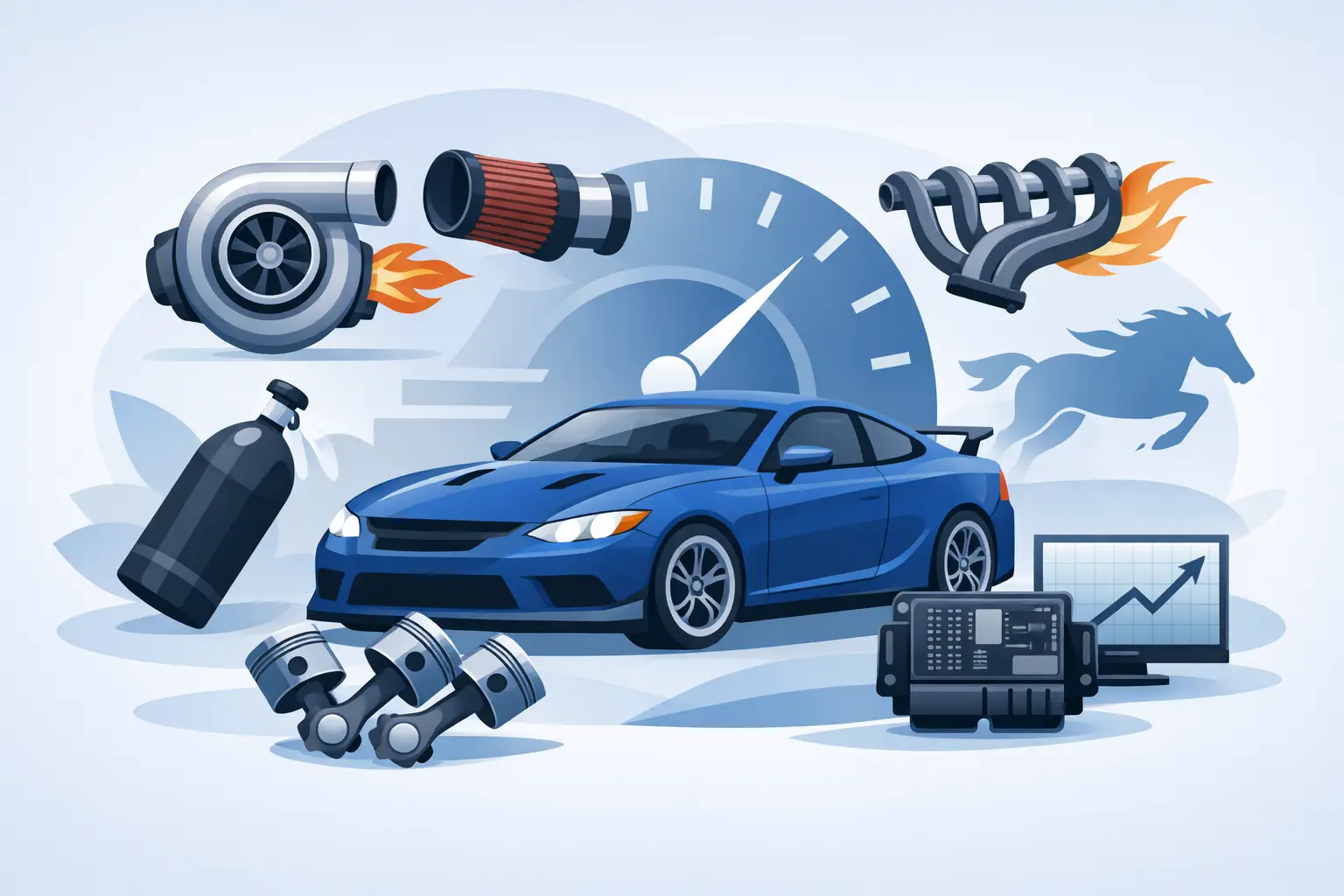
You can spend a lot of money chasing power and still end up with a car that feels barely quicker. That usually happens when people ask what upgrades increase horsepower, then buy parts based on hype instead of how the engine actually makes power. On most Japanese platforms, the best gains come from parts that improve airflow, fuel delivery, tuning, and traction as a complete setup - not from random bolt-ons.
If you are building a Honda, Nissan, Acura, Mitsubishi, Mazda, or Infiniti, the answer is never just one part. It depends on whether the car is naturally aspirated or turbocharged, what shape the engine is in, and whether the supporting parts can handle more power. The fastest way to waste money is adding performance parts to a tired engine with boost leaks, ignition issues, or a clogged exhaust.
What upgrades increase horsepower on naturally aspirated cars?
Naturally aspirated engines usually gain power in smaller, more honest increments. You are not forcing in more air with boost, so every upgrade has to help the engine breathe better or run more efficiently. That means expectations matter. A cold air intake by itself is not a magic fix, and neither is an axle-back exhaust.
The best starting point is usually intake, header, exhaust, and tuning together. On a K-series Honda or a high-revving B-series setup, a well-matched intake and header can make a real difference when paired with a proper tune. The same goes for certain VQ, BP, and 4G63 naturally aspirated combinations, although results vary by platform and factory restrictions.
Camshafts are where naturally aspirated builds often start getting serious. More aggressive cams can add meaningful horsepower, especially when paired with valve train upgrades and tuning, but they shift the powerband and can change drivability. A street car that sees daily use may not want a setup that only comes alive near redline.
Higher compression is another proven route, but it is not a casual bolt-on. Pistons, machine work, fuel requirements, and tuning all come into play. Done right, it works. Done halfway, it turns into an expensive lesson.
What upgrades increase horsepower on turbo cars?
Turbo cars usually respond faster and more dramatically to the right modifications. That is why platforms like the 350Z turbo builds, SR20DET swaps, Evo and DSM setups, Mazdaspeed cars, and turbo K-series conversions have such a strong following. More boost can mean more power, but only if the engine can get enough air in, enough fuel in, and enough heat out.
A tune is often the biggest gain per dollar on a turbo car, especially if the factory calibration is conservative. Even on mostly stock setups, tuning can sharpen throttle response, optimize boost targets, and improve power delivery. But tuning is only as good as the hardware and engine health behind it.
After that, the common power path is intake, intercooler, downpipe, full exhaust, and boost control. Reducing restriction before and after the turbo helps the system work more efficiently. On many Japanese turbo platforms, the factory exhaust and intercooler become bottlenecks pretty quickly once boost goes up.
A larger turbo can add major horsepower, but it changes the character of the car. Bigger turbos often mean more top-end power and more lag. For a street-driven build, the best turbo is not always the biggest one. A smaller responsive setup that makes usable midrange often feels better than a dyno-focused build that only wakes up late.
Fuel system upgrades matter more than people want to admit. Injectors, pump, regulator, and sometimes rails need to match the power goal. If they do not, you are not building horsepower - you are building risk.
The upgrades that sound good but rarely deliver much
Some parts are worth buying for sound, feel, or reliability, but not because they add big horsepower. Cat-back exhausts can help on the right setup, but on an otherwise stock naturally aspirated car they are often modest gains at best. Throttle body upgrades can be useful on certain builds, but they are rarely the first place real power comes from.
Pulley kits, ignition parts, and off-the-shelf intake systems all get marketed hard. Some do help. Some mainly make the engine bay look better or change the sound. There is nothing wrong with that, but it is better to call it what it is.
Weight reduction also gets mixed into horsepower conversations. Lighter wheels, seats, and body components can absolutely make a car quicker, but they do not increase engine output. They improve acceleration by reducing mass, which still matters a lot in the real world.
Tuning is where parts start working together
If there is one upgrade that gets underestimated, it is tuning. A proper tune is what turns a pile of parts into a combination. Airflow mods without tuning can leave power on the table, create drivability issues, or push the engine into unsafe territory.
On older JDM-oriented platforms, especially cars that have passed through multiple owners, tuning also helps clean up years of mismatched modifications. We see plenty of builds where the real problem is not the part itself - it is that the car has a mix of stock, used, and aftermarket components with no calibration tying them together.
That is also why sensor condition matters. A weak MAF, tired O2 sensor, boost leak, or fuel pressure issue can make good parts perform like bad ones. Before asking how to make more horsepower, make sure the car is actually making the power it should in stock form.
Supporting mods are not optional
Horsepower upgrades only work when the rest of the car can support them. Clutches, cooling systems, differentials, brakes, and engine management are not as exciting as a big turbo or cam set, but they often decide whether the build feels sorted or sketchy.
Cooling is a big one. Once power goes up, so does heat. Radiators, fans, oil coolers, and intercoolers stop being background parts once you start leaning on the car. A setup that makes one strong dyno pull but heat-soaks after ten minutes is not a solid street or track package.
Drivetrain condition matters too. If the clutch is slipping or the differential is tired, extra horsepower never fully reaches the pavement. Sometimes the best performance upgrade is replacing worn OEM components with inspected, tested parts before adding anything more aggressive. That is especially true on older Japanese cars where original hardware has already seen years of abuse.
OEM, used, and aftermarket all have a place
A lot of enthusiasts think making more power means replacing everything with aftermarket parts. In reality, some factory components are worth keeping, and some used OEM parts make more sense than cheap no-name replacements.
Factory throttle bodies, manifolds, sensors, igniters, and accessory systems are often more reliable than bargain aftermarket versions. On many builds, the smart move is mixing proven aftermarket performance parts with vetted OEM hardware where reliability matters most. That is one reason shops and dismantlers that actually know Japanese platforms can save builders time - the right used OEM part can keep a project moving without dealership pricing or marketplace guesswork.
At A-Solutions Auto Parts, that balance is part of the job. Some customers need a performance upgrade. Others need the tested OEM sensor, engine accessory, or intake component that keeps the upgrade package working the way it should.
How to decide what upgrades increase horsepower for your build
Start with your goal, not the catalog. A 300 wheel horsepower street car has very different needs than a 500 horsepower drag setup or a track car that needs repeatable laps without overheating. Power target, fuel type, budget, and intended use should decide the parts list.
If the car is naturally aspirated, expect slower gains and focus on efficient combinations. Intake, exhaust flow, cams, and tuning usually matter more than flashy add-ons. If the car is turbocharged, focus on boost efficiency, fuel supply, intercooling, and calibration before jumping to the biggest compressor you can afford.
Most important, be honest about the condition of the platform. Compression numbers, leak-down results, maintenance history, and sensor health tell you more about your horsepower path than social media ever will. A clean, well-sorted setup with moderate power almost always outperforms a rushed high-horsepower build that is always one problem away from sitting in the garage.
The best power upgrades are the ones that match the engine, the chassis, and how you actually drive. Build around that, and the car will feel faster where it counts - not just on paper.